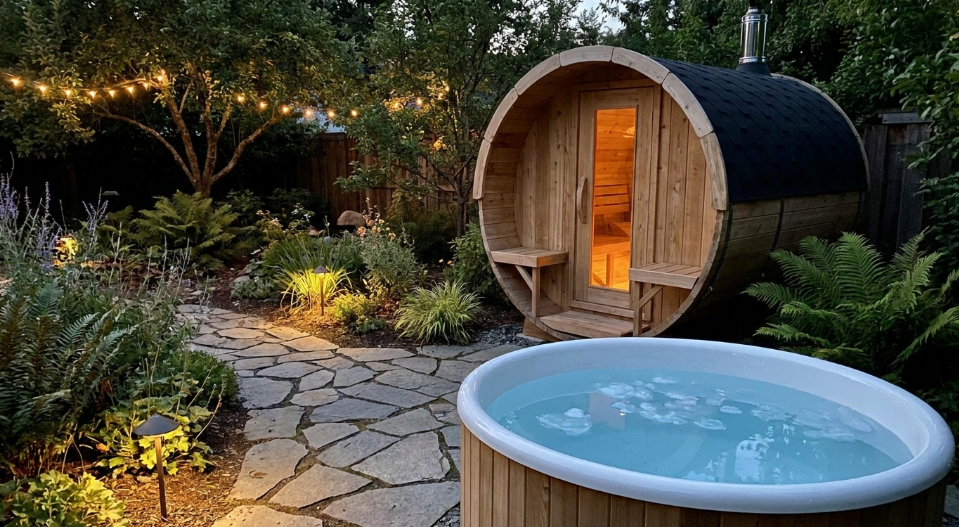
Whether a cold plunge is a weekend DIY project or a job for a licensed contractor mostly comes down to the unit type. A portable inflatable or insert tub with a plug-in chiller can be set up by one person in an afternoon with no special tools, while a hard-plumbed unit with a dedicated drain and a new electrical circuit generally needs both an electrician and often a plumber. Professional installation typically adds $500 to $2,000 to the total cost. The right call depends less on general handiness and more on whether the setup involves permanent plumbing or electrical changes.
What Makes a Cold Plunge DIY-Friendly?
A portable tub, inflatable or rigid insert style, paired with a separate plug-in chiller is the clearest DIY case. There’s no permanent plumbing to install, no wall to cut into for a new circuit, and the whole setup can move if a household relocates. Assembly usually means inflating or positioning the tub, filling it with a garden hose, and plugging in the chiller to a properly grounded outlet, all within an afternoon for most people with basic patience and no specialized tools required.
When Does a Cold Plunge Need a Professional?
Anything involving a dedicated drain line, a hard-plumbed water fill, or a new electrical circuit crosses into territory better left to licensed trades. A built-in tub that ties into household plumbing for draining and refilling needs a plumber familiar with local code for both the drain sizing and backflow prevention. A chiller drawing more current than a standard outlet can safely handle needs a dedicated circuit run by an electrician, and any outlet near standing water needs proper ground-fault protection installed correctly, which isn’t a place to guess.
Renters: Why DIY Usually Makes More Sense
For anyone renting, a portable setup avoids the landlord conversation entirely, since nothing permanent gets installed and the whole unit can move at the end of a lease. A garage, covered patio, or even an apartment balcony with proper drainage planning can work for a portable tub in a way that would never fly for a permanently plumbed installation requiring a new electrical circuit or a drain cut into existing plumbing. This is one of the clearest cases where the DIY route isn’t a compromise, it’s genuinely the better fit for the situation.
Homeowners With a Garage or Basement: Weighing Both Options
A homeowner with a dedicated space has more flexibility to go either direction. A DIY portable setup gets a cold plunge running immediately at lower cost, while a professionally installed hard-plumbed unit offers a cleaner long-term setup with automatic filling, draining, and generally less manual water management over years of use. For a garage or basement that already has accessible plumbing and adequate electrical capacity nearby, professional installation costs less than it would in a space requiring new lines run a long distance, which is worth getting quoted before assuming the fully installed route is out of budget.
Outdoor Backyard Setups: A Middle Ground
An outdoor deck or patio installation often lands between the two extremes. A chiller-equipped standalone tub can sit on a reinforced deck or a concrete pad without full plumbing if water changes are done manually every few weeks, cutting the professional work down to just the electrical circuit and GFCI outlet. Full drain plumbing to a nearby yard drain or the household sewer line adds convenience but also adds most of the professional labor cost, so it’s worth deciding upfront how much manual water management is actually acceptable before paying for a plumbing hookup that convenience alone doesn’t strictly require.
What Tools Does a DIY Install Actually Require?
For a portable tub and plug-in chiller, the tool list is short: a garden hose for filling, a level to confirm the surface underneath is even before adding a few hundred pounds of water, and basic hand tools for assembling any included frame or cover hardware. A voltage tester is worth the ten dollars to confirm an outlet is properly grounded before plugging in a chiller, especially in an older garage or basement where wiring quality can be inconsistent. None of this requires specialized equipment or trade experience, which is exactly why this category of setup stays firmly in DIY territory for most owners.
What About Filtration Setup on a DIY Build?
A plug-in chiller with a built-in filter loop is typically the simplest DIY-friendly option, since the filtration hardware comes pre-plumbed into the chiller unit itself and just needs the intake and return lines connected to the tub. Adding a separate ozone unit is still a reasonable DIY step for most portable setups, usually just running a line into the water and plugging in a second small unit, though it’s worth checking the specific tub manufacturer’s compatibility notes first, since not every chiller and ozone combination is designed to work together out of the box. A built-in unit skips this step entirely, since the manufacturer has already matched the filtration and ozone hardware to the tub’s volume before it ships.
What Does the Full Cost Comparison Look Like?
A DIY portable setup, tub plus chiller, typically runs $1,500 to $4,000 total with no added labor cost. A professionally installed hard-plumbed unit runs $4,000 to $9,000 for the equipment plus $500 to $2,000 in labor depending on how much new electrical and plumbing work is involved. Anyone pricing out a DIY build against ready-made options before deciding can look at SweatDecks’ lineup for a sense of what a fully assembled, ready-to-plug-in unit costs compared to piecing one together from separate parts.
Frequently Asked Questions
Can most people install a cold plunge themselves?
A basic inflatable or insert tub with a plug-in chiller can usually be set up in an afternoon. A hard-plumbed unit generally needs an electrician and often a plumber.
How much does a professional cold plunge installation cost?
Professional installation typically adds $500 to $2,000 on top of the unit’s price, depending on required electrical and plumbing work.
Does a DIY cold plunge install still need an electrician?
If a dedicated circuit or GFCI outlet is needed near a wet location, yes, that portion should go to a licensed electrician.
What’s the biggest risk of a DIY cold plunge install gone wrong?
Improper electrical work near standing water is the most serious risk, followed by water damage from a poorly sealed drain or overloaded surface.
Is a renter better off with a DIY setup?
Generally yes. A portable tub with a plug-in chiller moves between apartments without permanent changes a landlord would need to approve.
References
- “Effects of cold-water immersion on health and wellbeing: A systematic review and meta-analysis.” PLoS One, 2025. https://pubmed.ncbi.nlm.nih.gov/39879231/
- “Cold-water immersion (cryotherapy) for preventing and treating muscle soreness after exercise.” Cochrane Database of Systematic Reviews, 2012. https://pubmed.ncbi.nlm.nih.gov/22336838/
- “Effects of heat and cold on health, with special reference to Finnish sauna bathing.” American Journal of Physiology – Regulatory, Integrative and Comparative Physiology, 2018. https://pubmed.ncbi.nlm.nih.gov/29351426/
- NFPA electrical and equipment clearance standards. https://www.nfpa.org/